.png?width=1676&height=300&name=WS_Logo_full_blue%20(1).png "Workstand full logo")

The Bike Shop Loyalty Marketing Guide: Turning One-Time Buyers Into Lifetime Riders Independent bike shops have always been built on relationships. The customer who's been coming in for fifteen years, who knows the staff by name, who wouldn't think of buying a bike anywhere else. That kind of loyalty is the industry's oldest advantage, and in 2026 it's also its most underused marketing asset.
Here's the disconnect. Most shops understand loyalty instinctively on the floor, in the way they treat the person standing in front of them, but very few have built any system to nurture it once that person walks out the door. The result is that years of goodwill and purchase history sit dormant while the shop spends its energy chasing new customers who cost far more to win.
This guide covers the full picture: why loyalty is the highest-return marketing a bike shop can invest in, the kinds of loyalty that actually matter for a specialty retailer, how to use the customer data you already have, the specific tactics that work, and how to measure whether any of it is paying off. It's built on what we've learned working with thousands of independent dealers, and where it helps, we'll show the numbers behind the advice.
Why Loyalty Is the Highest-Return Marketing You're Not Doing
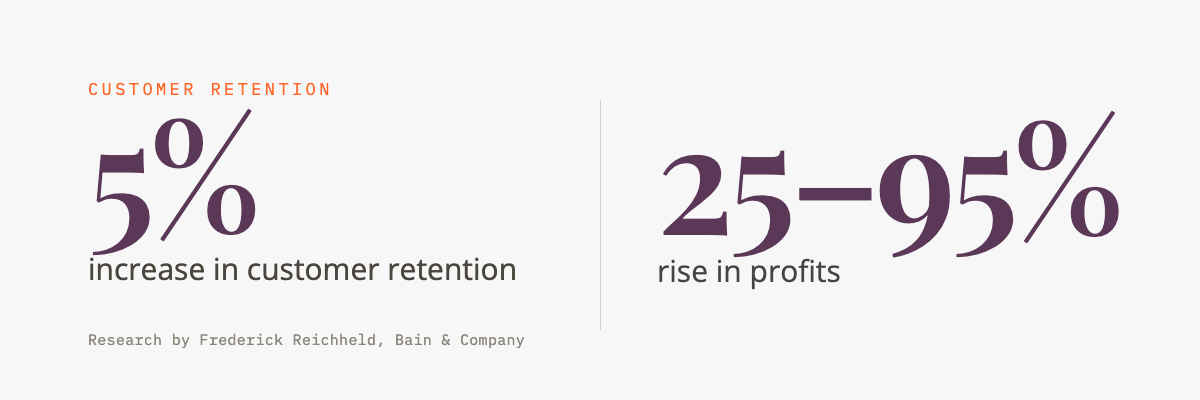
The economics of customer retention have been studied for decades, and the findings are remarkably consistent. Research by Frederick Reichheld at Bain & Company found that increasing customer retention by just 5% can raise profits anywhere from 25% to 95%. It remains one of the most documented returns in all of marketing, and even the low end of that range outperforms most paid acquisition.
The reason is simple math. The probability of selling to an existing customer runs between 60% and 70%. For a new prospect, it's between 5% and 20%. A customer who already knows and trusts your shop is somewhere between three and ten times more likely to buy than a stranger, and they don't cost anything to reach a second time. Acquiring a new customer, by most estimates, costs five times more than retaining an existing one.
There's a compounding effect worth understanding, too. After a first purchase, a customer has roughly a 27% chance of ever buying from you again. After a second purchase, that jumps to about 49%. After a third, it climbs past 62%. Each additional purchase makes the next one dramatically more likely, and loyal customers spend more as the relationship deepens, on average around 67% more per transaction than a first-time buyer. The entire challenge of loyalty marketing is getting a customer from that first purchase to their second and third, because after that, the relationship tends to sustain itself.
For a bike shop operating in a finite local market, this matters more than it does for almost any other kind of retailer. You cannot simply keep finding new customers forever. There are only so many households within driving distance. The shops that thrive over the long run are the ones that maximize the value of every customer they've already earned, not the ones endlessly refilling a leaky bucket.
The Three Kinds of Loyalty (and the One Bike Shops Win)
Not all loyalty is the same, and understanding the difference helps you invest your effort where it actually pays off.
Transactional loyalty is loyalty you buy. Points, punch cards, discounts, rewards. The customer keeps coming back because there's a tangible incentive to do so. This works, but it's shallow, and it's vulnerable to the moment a competitor offers a bigger discount. It also tends to attract the most price-sensitive customers, who are the least profitable to begin with.
Behavioral loyalty is a habit. The customer returns because you're convenient, because you're where they always go, because switching would take effort. This is more durable than transactional loyalty, and it's built through consistency and reliability over time.
Emotional loyalty is the deepest kind. The customer returns because they feel a genuine connection to your shop, because they trust your expertise, because they're part of the community you've built. This is the loyalty that survives a competitor opening down the street, that generates referrals, that makes someone drive past two other shops to get to yours.
Here's the strategic point. Emotional loyalty is exactly the kind that online retailers and direct-to-consumer brands cannot manufacture, and it's exactly the kind that independent bike shops are structurally positioned to win. Amazon can beat you on price and selection. But, they don't know a customer's name, remember their riding history, fit them properly, or invite them on a group ride. Your entire competitive advantage as a local shop lives in emotional loyalty. The mistake most shops make is assuming that advantage takes care of itself. It doesn't. It has to be nurtured deliberately, and the shops that systematize that nurturing pull steadily ahead of the ones that leave it to chance.
The Data You Already Have
Every time a customer buys something from you, your point-of-sale system records it. What they bought, when, how much they spent, whether they've been in before. Most shops have years of this data sitting in their system, the next step is doing something with it.
That transaction history is the entire foundation of loyalty marketing. It's what tells you that a customer bought a bike six months ago and is due for a first tune-up. It's what tells you that a reliable customer hasn't been in for a year and may be drifting away. It's what tells you which customers are your highest-value regulars and deserve to be treated like it. Without that data, loyalty marketing is guesswork. With it, every message you send can be relevant, timely, and specific.
The obstacle has always been that acting on this data manually is impossible. No shop owner has time to comb through purchase records, figure out who's due for what, and send individual follow-ups. The work is real, it's constant, and it's the first thing to fall off the list during the busy season, which is precisely when it matters most.
This is where automation changes the equation. Workstand IQ Loyalty is built to turn that dormant transaction data into automatic, behavior-based outreach. It watches the purchase history for you and triggers the right message at the right moment: a service reminder timed to when a bike is actually due, a win-back offer when a good customer goes quiet, a thank-you when someone crosses into your highest-value tier. It uses your POS data and works continuously once it's configured, without requiring you to touch it during the weeks you can least afford to. For most shops, this is the difference between knowing loyalty matters and actually doing something about it.
The Loyalty Playbook
Here are the specific tactics that drive repeat business for bike shops, roughly in order of how reliably they pay off.
-
Post-purchase service reminders. This is the single most natural loyalty motion in cycling retail. A customer buys a bike, and somewhere between three and six months later, that bike is due for a tune-up. A reminder timed to that moment ("Your bike has been on the road a few months now, time for a quick check-up?") does three things at once: it drives service revenue, it brings the customer back into the shop, and it reinforces that you're paying attention to them. Because it's tied to an actual purchase date, it never feels like spam. It feels like service.
-
Lapsed-customer win-backs. Every shop has customers who used to come in regularly and then, for no dramatic reason, stopped. They didn't get angry. They just drifted. A win-back message that reaches a good customer after six or twelve months of silence, ideally with a reason to return, recovers relationships that would otherwise quietly disappear. These customers already know and trust you, which makes them far easier to re-engage than a stranger is to acquire.
-
E-bike owner education. E-bike buyers need more post-purchase support than traditional cyclists, and that need is a loyalty opportunity in disguise. A sequence of messages covering battery care, charging habits, when to bring the bike in for diagnostics, and how to get the most out of the motor system positions your shop as the trusted expert. It increases service visits, reduces the "I didn't know I needed to come in" problems, and builds exactly the kind of dependent, high-value relationship that keeps an e-bike owner coming back to you specifically.
-
Recognizing your best customers. The top fraction of your customer base drives a disproportionate share of your revenue. Those people should feel recognized. It doesn't require an elaborate program, a note acknowledging a milestone, early access to a new model, a small perk at a certain spend level. The point is to make your most valuable customers feel seen, because those are the relationships you least want to lose and the ones most likely to generate referrals.
-
Seasonal and milestone touchpoints. A message at the start of spring riding season, a note on the anniversary of a bike purchase, a check-in before the fall riding window. These predictable, calendar-based touchpoints keep your shop top of mind during the moments a customer is most likely to buy or service, and because the timing is obvious, they're easy to plan and automate well in advance.
Points Programs and Structured Loyalty: When They Fit
A lot of shop owners assume "loyalty program" means points and punch cards. For high-consideration purchases like bikes that model is often a poor fit. It’s not necessarily a bad idea, it’s just bad alignment.
Points programs work best for frequent, low-cost, habitual purchases, the coffee you buy every morning, the lunch spot you hit every week. A bike is not that. Someone buys a bike every few years, so a points balance accumulates too slowly to change behavior in the moment. Structuring your loyalty strategy primarily around points for bike purchases tends to underwhelm.
Where structured loyalty can work for a bike shop is on the recurring side of the business: service, accessories, apparel, and consumables. A customer who comes in regularly for tune-ups, tubes, chains, and nutrition is making exactly the kind of frequent purchases a rewards structure is designed to reinforce. A simple structure that recognizes cumulative spend, or that rewards service loyalty specifically, can nudge those recurring purchases back toward your shop rather than a big-box store or an online retailer.
Our guidance is this: don't lead your loyalty strategy with points. Lead it with relationships, timely, relevant, personal outreach built on purchase history, and use structured rewards selectively where the purchase frequency actually supports them. Premium and paid loyalty tiers can generate meaningfully higher lifetime value when they're built around real perks, but they only work once the foundational relationship marketing is already in place.
Measuring Loyalty
You don't need a sophisticated analytics setup to know whether your loyalty efforts are working. A handful of numbers tell the story.
-
Repeat purchase rate. Of the customers who bought from you, what percentage came back and bought again? Across ecommerce broadly, the average sits around 28%, meaning most businesses lose roughly seven of every ten first-time buyers. If your rate is climbing over time, your loyalty work is paying off. If it's flat or falling, that's where to focus.
-
Customer lifetime value. What is a customer worth to you over the full course of your relationship, not just on their first purchase? This is the number loyalty marketing is ultimately designed to grow. You don't need it to the penny; you need to know whether it's trending up year over year.
-
Win-back rate. Of the lapsed customers you reach out to, how many come back? This tells you directly whether your re-engagement efforts are recovering revenue that would otherwise have walked away for good.
-
New versus returning customer mix. A healthy shop grows through both. If your revenue is tilting heavily toward one-time buyers, your retention needs attention. If it's almost entirely returning customers, you may have a top-of-funnel problem instead. The balance is the signal.
Where the Effort Goes vs. Where the Automation Goes
Most of the thinking in this guide, the relationships, the community, the way you treat a customer on the floor, is human work that no software can replace, and shouldn't try to. That's the part of loyalty only you and your staff can do, and it's the part that matters most.
The execution layer is different. Watching purchase dates, remembering who's due for service, noticing who's gone quiet, sending the right message at the right time, and doing all of it consistently across hundreds or thousands of customers, that's work no shop owner can do by hand, and it's exactly what automation is for. The goal isn't to automate the relationship. It's to automate the remembering, so the relationship gets the attention it deserves at the moments that count.
Workstand IQ Loyalty handles that execution layer for independent bike shops. It runs on your real transaction data, triggers service reminders and win-backs and loyalty touchpoints automatically, and keeps working through your busiest months without adding anything to your plate. It's available to Workstand subscribers and runs without manual intervention once it's set up. If turning your purchase history into consistent, automated customer outreach is something you want working for your shop, that's a conversation worth having.
The bike industry is harder than ever, and the shops succeeding are the ones treating their existing customers as the asset they are. You've already earned their loyalty. The opportunity is to stop letting it sit idle.
What Supplier Direct-to-Consumer Sales Mean to IBDs
Collecting Customer Contact Information is Critical
No Comments Yet
Let us know what you think